Showing posts with label poetry. Show all posts

Sunday, July 24, 2011

Giving Away Poetry

In general, I like John Gallaher's poetry and music blog. It's almost always thought provoking and, even oftener, liable to raise to a few hackles. The latest from July 22nd didn't disappoint, "It's time for a new publishing model (give it away)"


In it, Gallaher advocates giving away written work for free. Not all work, but some it, a lot of it. He begins by citing another writer named David Pogue who also talks about giving away versions of work online. In Pogue's case, it's books on computers. In Gallaher's case, it's poetry. Here's a quote:


Amazon is set up for a version of this sort of thing (showing excerpts of work), where one can browse a few pages from many books. It’s probably about as far as Amazon can go. But publishers and authors can go further. In the way that music labels give away free samplers of their current releases, and individual artists usually have a few mp3s up for free on their websites, I think publishers and/or authors should post PDFs of a good chunk (if not all) of books of poetry. 


I kind of like the idea of giving away poetry. Perhaps because my book didn't sell so well (though outside the world of Billy Collins and Mary Oliver's whose does?). But I also get how free stuff brings in new participants, or at least because of price, doesn't lock them out. I know I've found quite a few new composers, musicians, largely through free of music. 


The biggest problem, at least for me and probably for others, is that the publishing world brings other benefits--some small recognition, access to marketing and readings, and, if one hopes to use their work as access to other kinds of work, a kind of validation. What would be best is if the publishers agreed to allow a certain portion of the work to be posted as a pdf, given away. I'm not talking about one or two poems, but a big chunk. If the examples Gallaher cited are to be believed, this probably wouldn't negatively affect sales. In fact, it might drives sales of books a bit and perhaps create a larger audience for poetry. In the post, Gallaher says he wants to post his work free online, though by the end admits he's not sure how, or perhaps he got cold feet.  It is kind of scary. Hmmmm

Monday, April 11, 2011

Melville's Persistence and, well, also a bit of Palestine

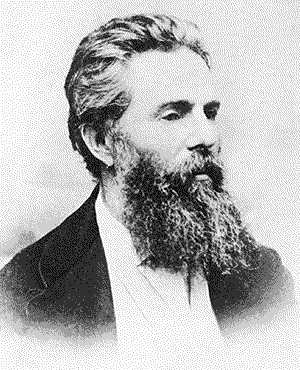
I’ve been reading Herman Melville’s 18,000 line, 150 canto poem Clarel. No one reads Clarel. I can’t even say that I’m enjoying it all that much though admit there are moments of great lyricism.

Why am I reading it? First, it’s about Palestine and pilgrimage, two of my obsessions. Second, it’s poetry. Third, because Melville wrote it long after his writing career seemed ended. Because no one wanted him to write it. Because there was no reason for him to write it—there was no money and no one, including his wife and friends, thought his writing poetry a worthwhile endeavor.

Which got me thinking about obscurity and writing.

Herman Melville wrote five books before Moby Dick. He wrote Moby Dick before he was 30. Moby Dick and his tales of whaling brought Melville fame and a bit of fortune, but two domestic books later, his literary star had plummeted. By the time he was 35, he was for all apparent intent washed up as a writer.

Melville’s spirits and health likewise plummeted. In an attempt to reclaim both, his family and friends subsidized a trip to Palestine in 1857. Melville kept journals and wrote letters but it wasn’t until nineteen years later that he capitalized on his experience by publishing his 18,000 line 150 canto poem Clarel: A Poem and Pilgrimage in the Holy Land.

He tried for years to write poetry. His first book of poems went unpublished. His second, Battle Pieces, virtually unread. No one, including his wife, approved of or subsidized his poetry. In fact, Melville’s wife confided to her stepmother, “Try to not mention to any one he is writing poetry—you know how such things spread.”

Melville lectured for three years after his return drawing on his South Seas experiences and travels, but never talked about his trip to Palestine. In any event, he grossed less than $1500 in three years and three years after his return, Melville found a dull job in the New York Customs Service as an Inspector. It was the job he would retain the rest of his life.

Through all of it and until he died, Melville continued writing poetry. This time it was Clarel, his epic poem about Palestine and a young man's search for faith. While not autobiographical, the poem utilizes images and experiences from his journals. But why poetry? Why even to continue writing?

Even Melville himself said about Clarel it’s “a metrical affair, a pilgrimage or what not, of several thousand lines eminently adapted for unpopularity.”

Clarel was finished and published in 1876. To no one's surprise including apparently Melville's, the reception was almost uniformly negative. Writing in 1876, Edmund Clarence Stedman of the New York Tribune, wrote, “There is ... no plot in the work; but neither do the theological doubts, questions, and disputations indulged in by the characters, and those whom they meet, have any logical course or lead to any distinct conclusions.”

When Melville died in 1891, he was almost completely forgotten.  Anyway, so back to the question regarding why I’m reading Clarel. I suppose my only answer is: for the same reason Melville wrote it. 

Sunday, April 3, 2011

Byron Rocks, Sort of


Byron wrote “She walks in beauty, like the night,” and “The Destruction of Sennacherib,” as lyrics to go with music composed by his friend, Isaac Nathan. Nathan was not only a composer, but a Jewish composer, which made both Byron's collaboration with him noteworthy and, at the time, scandalous. The collection, first offered in 1815, sold out immediately. Pirated editions, cashing in on the collection’s popularity, also sold out. And Byron and Nathan collaborated on an expanded version, published the following year.

She Walks in Beauty


You can hear several more of Byron's poems set to music at this site.

The music does, indeed, give a different kind of power to the poems. Byron wrote “She walks in beauty,” on seeing his cousin’s new wife at an evening event, wearing the black of mourning, looking beautiful and virtuous; Nathan matched that with a melody for “Lekha Dodi,” which envisions the Sabbath, arriving at evening, as a virtuous bride. Byron wrote “Oh Snatch’d Away in Beauty’s Bloom,” a mournful poem about the futility of mourning, which Nathan set to a meditative melody. “The Destruction of Sennacherib,” Byron’s dramatic retelling of 2 Kings 32-37, the miraculous plague that foils an invasion of Judah, pairs with Nathan’s dramatic music, reminiscent of Schubert’s uncanny “Erlking,” also written in 1815.

But then if it sounds so good, why did Nathan’s music disappear so completely? The paper sourced here claims anti-Semitism. Perhaps. 

Sunday, January 16, 2011

The Weight of Old Work

When Jewish German poet Paul Celan visited Israel in 1969, Israeli audiences begged him to recite his poem “Death Fugue” (“Black milk of morning we drink you at dusktime / we drink you at noontime and dawntime we drink you at night / we drink and drink”). He refused. Celan’s host and the people arranging his readings and meetings demanded he read it. He refused. Not once did he read that poem to the Jews in Israel. After two weeks in the Holy Land, Celan abruptly returned to Paris. Ten months later, he jumped to his death in ParisSeine River (“we scoop out a grave in the sky where it’s roomy to lie”).

Israel was not the only audience Celan denied “Death Fugue.” During the last decade of his life, in fact Celan refused to allow the poem to be further anthologized or read. Why? Based on translator and biographer writings (e.g., Pierre Joris), Celan didn’t want to be associated with what was already being called Holocaust Poetry (as a Jewish survivor of that horror, no one can blame him). Moreover and perhaps more importantly, he felt, according to Joris, that the constant focus on that one poem stole attention from his other later work.

In a similar way, the classical Russian composer and musician Sergei Rachmaninoff came to loathe his famous Prelude in C-sharp minor as it, he said, “overshadowed” his other compositions. Every where he toured, audiences demanded it—“The Prelude, they shouted—“The Prelude,” they screamed from their red velvet chairs. Of course, Rachmaninoff was one of the few pianists who could flawlessly play this work—Rachmaninoff’s hand spanned almost two octaves. In disgust, Rachmaninoff twice left the stage after angry listeners heckled him for not playing it. Check out this pretty funny video of Igudesman and Joo playing the Prelude, which underscores why the big hands are important!


More seriously, in thinking about these two artists, I wonder just how much our expectations of an artist figure in our assessment of the work, how much does what came before influence our reception of what comes after? It is impossible to read new work by contemporary poets as diverse as Sharon Olds, Li-Young Lee, Brigit Pegeen Kelly without referring to earlier books, the books that first garnered them attention. In all three cases, critics leveled the accusation that these poets are “writing the same poems over and over again.” We expect our artists to not only surpass earlier work but to grow, to change. But in my opinion it is almost impossible for readers familiar with their work to judge without the prejudice of what came first. My point is perhaps the later work IS better but we can’t judge it on its own merits.

One factor affecting our reception of an artist’s new work is the the widely propagated statement that artistic creativity tends to peak early. While we can always point to a Wallace Stevens, there are multiples more of cases like the ones noted above where a poet or writer or artist produces something extraordinary and then disappoints in some fashion over and over. But do poets really peter out after forty or fifty? Is creativity really the primary domain of the young? Sure, there are plenty of examples of young geniuses though when one cites Keats and Shelley, remember they died young. Perhaps Keats early work (completed before his death at age 25) was just a warm-up for what would have come later. I don’t think the situation is clear either way and there are enough examples to support both sides. We might complain that Galway Kinnell has not produced a second Book of Nightmares, but in my opinion, Anne Carson and CD Wright are only getting more courageous with age. I mean Philip Schultz, who won the Pulitzer Prize for his book Failure, would be well served to let his first book go quietly out of print. By the way, I consider that last statement a compliment. If, in twenty years, someone writes that same sentence about me and my work, I will have written a good life.

Here’s a crazy thought—perhaps the rumor of young genius, older has-beens was started by old poets and wizened painters so that they no longer have to measure up. One must think that once an artist has created a body of much-lauded work, it would be terribly tiring to try and surpass it. Moreover, it might be debilitating, psychologically impossible to even contemplate the task. How can I? What if I can’t? Will they still love me? What will they say? I know. I know. We like to think that true artists are beyond caring how their work is received. But most do, if they are human, especially if the audience includes those they love or admire, those whose opinions matter.  How can an artist transcend what is already transcendent? Which brings me back to my crazy though, why not go ahead and eliminate expectation?

If it’s not actually true that genius is the domain of the young, at least the idea that an artist has already shot his or her load to euphemistically put it by the time he or she reaches late middle age, reduces the pressure to perform. So one can get back to writing.

Sunday, December 12, 2010

Nick Flynn's Seven Testimonies and all the backup stuff

I returned to Israel two days ago to rain and 120 kph winds. It was the first real rain of what is supposed to be Israel’s rainy season. After the wildfires that consumed much of the country’s Carmel Mountains a week ago, the rain is welcome. As the power flickered on and off with the flares of lightning, I opened the November/December issue of American Poetry Review to find a series of poems by a poet and author I much admire, Nick Flynn. The series titled “seven testimonies (redacted)” is, to quote the footnote at the bottom of the page, composed of redacted versions of the testimonies of seven Abu Ghraib detainees as transcribed by the artist Danile Heyman, in Amman and in Istanbul, from 2006 to 2008. Nick Flynn was present for those testimonies gathered in 2007 in Istanbul.

Each of Flynn’s seven poetic testimonies is short ranging from eight to thirteen lines. Each line is also short, two to eight words. The poems are in first person, but a first person that feels drugged, drained, yes, tortured. Flynn creates a nightmarish quality with the use of fragmentation, repetition, illogical combinations. Erratic use of punctuation and capitalization between the individual poems suggests that the seven testimonies are one, that one runs into another, that each punishment was done to one, to all, without relation to the individual suspect, to what he or perhaps she did or might have done, or didn’t do at all. Here is the last of the seven poems of the series in its entirety:

My eyesight in years
I see up yes did this

Yes you this I saw
A sister you see

In the showers you this
In this with yes I

I was naked you this
Yes to me & wanted

Moreover, the “I” in these poems shifts so that at points the tortured and torturer become one and same. The series is the crime of Abu Ghraib rendered lyric.

The entire series fits on less than one APR page, page 8. The rest of page 8 and all of page 9 are taken up by the actual seven testimonies or at least significant samplings from them. The testimonies make for hard reading. But then so do the poems.

Which raises a question—why do we need the actual testimonies? In my mind, it as though Flynn feels his poems aren’t enough to convey the urgency, the terror, the pain of what these men underwent. As though his poems aren’t authentic enough without the backup of the prose.

Flynn goes far to convince the reader of authenticity. The title contains the word “testimony,” implying the source. If he had added “Abu Ghraib," there would have been no doubt. He also adds “redacted,” in parentheses to the title. Redaction is a form of editing in which multiple source texts are combined. Often the author/editor may make minor alteration to the texts (i.e., transform them into a single poetic work) so that they cohere. With all of this, Flynn leaves the reader little doubt that his poems emanate from actual testimony of Abu Ghraib detainees. This is of course reiterated in the footnote I quoted earlier.

All of this to make the point that I don’t think Flynn’s poems require the support of the actual testimonies. In fact, I think the prose testimonies undercut the emotional impact of the poems by their wordiness, their specificity, their almost clinical description. I wish Flynn had left them out.

As an American living in Israel and writing about my experiences in Israel, authenticity is an idea I spend time thinking about. Moreover, as an American poet reading other the work of other American poets, who often, in my mind, have difficulty writing about conflict, about war, even about the state of the world, I find the issue of authenticity a part of the puzzle. I’m going to write more about this, but not today. Right now, there is an authentic storm raging outside my house, a river pours from every gutter drowning the grass, the twelve pine trees that line the perimeter bending back and forth forty five degrees. I’m curious what will be left standing.

Tuesday, November 23, 2010

The Opposite of Home

I have lived in Israel now for over six years. Six years. I’ve never lived in one place for six years. I’ve never lived in any other place more than two. Granted, I spent one year of the six in New York. I spent another two years moving back and forth between Vermont and Israel, studying. When my mother was ill, I spent nine months back and forth between Atlanta and Israel. We moved twice within Israel. Last year, I bought the condo in New York and have been spending 50% of my time in the US. Still, I have called Israel home for six years. Home?

I am always dreaming of new places to live. I don’t mean JUST daydreaming about more square footage, a more extensive view, a different neighborhood, though like many people I often find myself imagining how it would be to live in a different house, a different city. I mean literally dreaming, at night, about the next place. Sometimes the dreams wake me up they are so dramatic and thrilling. They are often the ones I remember in the morning or when I wake up in the middle of the night. Of course this doesn’t mean they are my only dreams, but they are often the most vivid and I suppose the last ones I have before waking. Last night, there was a long rambling house on a hillside. From the window and through the trees, I could see the ocean throwing itself against a rocky shore. I knew, in the dream, I’d lived in the building before, in a smaller apartment, with a man I used to love. This time though I was looking at it for myself, only myself. The building was old and rooms had been added over time. Rooms opened to larger rooms, to balconies, to terraces. Some rooms had regular shapes, rectangular. Other rooms were round or had oddly shaped corners. There were places to hide. I knew there would always be a surprise in this house.

Like most dream houses, I never move into this house, even in the dream.

But I recognize the impulse that Kay Ryan describes in the short poem below to be free of encumbrances, to never settle, to test what it is that is most necessary. I don’t think I’m alone.

That Will to Divest

Action creates
a taste
for itself.
Meaning: once
you've swept
the shelves
of spoons
and plates
you kept
for guests,
it gets harder
not to also
simplify the larder,
not to dismiss
rooms, not to
divest yourself
of all the chairs
but one, not
to test what
singleness can bear,
once you've begun.

Tuesday, September 28, 2010

Barbarians and Writers

Today, a ten-person boat attempted to break Israel’s blockade of Gaza. On board, were Jews from Germany, the US, the UK, Israel who wanted to say, Israel’s policies are not ours. They carried books and school supplies for the Gazan children. Even though the Gazan leader would, if he could, murder every one of Israel’s fathers, every one of its mothers. Because of course the blockade does nothing but reinforce that hatred. Israel towed the small boat into Ashdod, one of its ports, without violence.

The barbarians are all of us.

I am reading Adina Hoffman’s biography of the Palestinian poet Taha Muhammad Ali called “My Happiness Bears No Relation to Happiness.” Hoffman is a Jew living in Jerusalem. Taha Muhammad Ali still lives in Israel. The book is successful in that it recounts one particular man's experiences, his tragedies, and his victories. It speaks of the restorative power of words and of poetry. While I think Hoffman's retelling of the poet's life is seen through a particular lens, the book is beautifully and compassionately written and speaks also, I think, to the possibility of healing. Both of them wish each other well.

If the barbarians are us, so perhaps are the saviors.

Here is a lovely poem by Taha Muhammad Ali.

       NEITHER MUSIC,
fame, nor wealth,
not even poetry itself,
could provide consolation
for life’s brevity,
or the fact that King Lear
is a mere eighty pages long and comes to an end,
and for the thought that one might suffer greatly
on account of a rebellious child.
My love for you
is what’s magnificent,
but I, you, and the others,
most likely,
are ordinary people.

My poem
goes beyond poetry
because you
exist
beyond the realm of women.

And so
it has taken me
all of sixty years
to understand
that water is the finest drink,
and bread the most delicious food,
and that art is worthless
unless it plants
a measure of splendor in people’s hearts.

After we die,
and the weary heart
has lowered its final eyelid
on all that we’ve done,
and on all that we’ve longed for,
on all that we’ve dreamt of,
all we’ve desired
or felt,
hate will be
the first thing
to putrefy
within us.

Saturday, September 18, 2010

One Year of Sin

Just a little meditation on Yom Kippur with line breaks...

At dusk, the streets go silent of cars and buses, television
programming blinks out, lawnmowers and leaf blowers
are stowed as the highways empty out, only to slowly fill
with children on bicycles, skaters and skateboarders, their dogs
running alongside, while the parents sit on benches
and chat about the last vacation to Puket or Berlin.
No one is supposed to die on Yom Kippur.

A day earlier, walking our small brown and white dog
through Park Se-adya Shoshani, my husband and I watched
a religious Jew dressed in his black coat and hat wave
what looked from a distance a feathered boa
over the head of a small boy who could not have been more

than three. Closer, I realized the scarf was in fact
a live white chicken. The chicken absorbs the past year’s
bad deeds, my husband said, looking a bit embarrassed. Even
that of a three year old child. The white chickens
are then slaughtered, so that the year’s evil dies with them.

This morning, I sent photos of Ayalon Highway empty
except for pedestrians and bicyclists to a friend, who
can’t believe that no one, I mean no one, drives
the whole day of Yom Kippur. For one day, in Israel,
there is nowhere to drive. In a few hours, the Israelis will
get back in their cars, but right now, I think I hear
the Mediterranean, the sins of the past year cast off.

Sunday, August 8, 2010

Ronny Someck and the Pleasure of Hebrew

One of the pleasures of learning another language is being able to gather another layer of meaning to the poetry written in that language. A poet I am currently struggling with, both in translation and metaphorically, is Ronny Someck. Someck has published nine (or perhaps ten) books of poetry in Hebrew and hosted a popular radio program in Israel for years. Decades earlier, he was part of a circle called the “Tel Aviv Poets," which included Mier Wieseltier, Yona Wallach, and others, who often wrote about contemporary Israeli street life, incorporating slang, images from television and popular culture into their poems. Their poetry was often fleshy and sexy. Someck's poetry still often is.

Anyway, the reason I bring him up today is that I’m reading some of his work in Hebrew and struggling with the translation. BUT one interesting aspect of Hebrew is that much of the language is built around what they call “binyamin” or buildings so that word groups arise from the same root. For example, “dahm” means blood. From that, we get “Ah-dom” or red, and “Ah-damn” which means man, and from that we get “Ah-dah-ma” meaning earth. Red begets Blood begets Man begets Earth and vice versa.

Here is a poem by Someck titled “Red Catalogue of the Word Sunset:”

A French poet sees a red sunset
and squeezes burgundy from the cloud grapes.
An English poet likens the sunset to a rose
and a Hebrew, to blood.
Oh my country, a land fastening cannibal lips
to the setting sun’s virginal throat,
my arms are oars of fear
and I, in the ark of my life, row
like Noah to Ararat.

It is a unsettling poem comparing Israel to a cannibal that ‘eats its own,' different from more civilized lands where sunsets lead to wine and roses. But what is lost in the translation is the play of the language through the poem. The red of the sunset becomes blood becomes land becomes man. Underlining Someck’s unsaid importance of this resonance to the poem is that these relationships are "seen" by a “Hebrew” poet not an Israeli poet whose language might be Arabic, or given the waves of immigration, English, German, Russian, etc. The Hebrew language becomes part of what makes this land the cannibal that it is (in Someck’s poem). Or as Mier Wieseltier, another Jewish Israeli poet wrote in the poem “A March for Long Distance Poets,” “The believer in what words can do / believes in what they did to him.”

Wednesday, August 4, 2010

Her Circle Ezine - Kind Enough to Include Me!

Her Circle Ezine is, in their words, an online portal of women's creative arts and activism from around the globe. By celebrating artists and writers whose work addresses the social issues of our time, we strive to bring these issues to the fore, whilst reaffirming connections between art, politics, and life. I've become an enormous fan for the poetry and prose, interviews, and essays, all created by an amazing array of talented writers.

They were lovely enough to ask me to submit a posting to their Writer's Life blog as a Guest Blogger! Take a look. Beyond my brief thoughts, there is a lot to draw you into their site.

Sunday, June 20, 2010

The Killjoy of Contemporary Poetry

In case you wanted another take on the state of contemporary poetry, its current killjoy, William Logan, reviews the current works of six poets (C.K. Williams, Tony Hoagland, Don Paterson, Keith Douglas, Derek Walcott, and Anne Carson) in June’s New Criterion. Perhaps there is a part of me that takes delight in William Logan’s nonstop bashing and snide contempt for much of contemporary poetry. God knows, I would not want to have his jaded eye trained on my work (Oh Oh Oh, if only my work would warrant such a look!) Mostly though, I find Logan’s tireless criticism wearisome. Perhaps it’s just me, but I prefer to have a critic point out what works in a poem than what falls flat.

In Logan’s world, almost all of contemporary poetry is just not quite right. Williams is too moralizing: “What but poetic deafness could make so many passages read like sociology texts.” On the other hands, Hoagland is too concerned with consumerism: “Hoagland is the Updike of American trash, forgetting nothing—but he hasn’t figured out how to recycle rubbish into art.” Likewise, Patterson is too sentimental: “The book ought to come with linen handkerchiefs from the broken mills of Glasgow or Aberdeen.” The dead war-poet Douglas can’t write a good line: “You need to go a long way to find the good lines in these poems, and when you do they’re surrounded by bad ones.” Meanwhile, Walcott can’t stop writing the same line, “I wish that in almost every book the flash of the sea weren’t compared to coins or the surface to a sheet of tin or the flight of birds to arrows.”

The only poet he saves praise for is Anne Carson, whose latest poetic effort Nox literally weighs in at two pounds and thirty dollars. I very much admire Anne Carson’s work though haven’t read Nox (I’m waiting for the ‘paperback’ edition). I found Plainwater and Eros, The Bittersweet, excruciatingly beautiful and over the top smart. Nox, which was written in large part as elegy to Carson’s disappeared brother, is also a meditation on Catullus 101, likewise a lament for a lost brother though written by the 1st Century BC poet Catullus. Does it seem surprising that Logan saves his praise for the one poet whose work hearkens back two thousand years? But I’ll reserve my take on Carson’s work until I’ve read it, which I admit, I’m looking forward to,

Granted, Logan has an unerring ability to hone in on a poet’s weakest lines and faults. Moreover, Logan’s critical prose is beautifully written if not uplifting. Finally, I suppose poetry needs at least one curmudgeon if only to balance the praise most poet/critics tend to heap on one another’s work. But his criticism won’t stop my reading of any of the poets whose work he derides, and, of course, I won’t stop reading his criticism. Sigh.

Friday, April 30, 2010

One War Ended

The Vietnam War ended on this day thirty-five years ago, the date marked by the fall of Saigon. Below, the first stanza of “April 30, 1975,” by the American poet and English professor John Balaban, who served in Vietnam as a conscientious objector doing alternative duties:


The evening Nixon called his last troops off,
the church bells tolled across our states.
We leaned on farmhouse porch pilings, our eyes
wandering the lightning bug meadow thick with mist,
and counted tinny peals clanking out
through oaks around the church belltower.
You asked, “Is it peace, or only a bell ringing?”

Perhaps only a bell ringing, the signal for a temporary hiatus in war’s blind march through history. Below a lush poem called "Curfew" written by Brian Turner, which also speaks to that small space of quiet. Brian served seven years in the US Army, most recently in Iraq. He has two books of poems—Here, Bullet and Phantom Noise. Both are must-reads.

                                   The wrong is not in the religion;
                                   The wrong is in us.
                                              --Saier T.

At dusk, bats fly out by the hundreds.
Water snakes glide in the ponding basins
behind the rubbled palaces. The mosques
call their faithful in, welcoming
the moonlight as prayer.

Today, policemen sunbathed on traffic islands
and children helped their mothers
string clothes to the line, a slight breeze
filling them with heat.

There were no bombs, no panic in the streets.
Sgt. Gutierrez didn't comfort an injured man
who cupped pieces of his friend's brain
in his hands; instead, today,
white birds rose from the Tigris.

Tuesday, April 20, 2010

Another Independence Day

Today marks Israel's 62nd year as an independent country. There has never been peace. There will likely never be peace. At least not in any timeframe that feels worth talking about.

Of course, last night Israel celebrated the anniversary with ceremony, speeches, fireworks. In Israel, there are more festivities the night between Memorial Day and Independence Day than on both New Year's Eves combined (the Jewish and the calendar). Our neighborhood erected a stage in its center surrounded by rides for the children, acrobats, booths selling every kind of cake, cookie, drink, candy imaginable. For two hours, officials including Tel Aviv's mayor (who lives in our neighborhood) delivered speeches extolling their as much as Israel's accomplishments, followed by dance and singing performances put on by local children's groups includng the Scouts (Tsofeem), dance groups, school groups. Behind them all, video and pictures of army personnel, local heroes, interspersed with images from the dancing and crowds played on two giant screens. Fifteen minutes of fireworks followed. And all this just for our neighborhood! Afterward, my husband and I went to a nearby party for drinks, more food, dancing that went on well into the early hours of morning.

I love the entire two days for its earnestness. There is no irony in all this exhibition. I also am sad, because nothing changes. After sixty two years, nothing has changed, it seems to me. Israel exists but always on a precipice.

I included a brief poem written by poet Aryeh Sivan. Sivan has written 14 (14!) books of poetry and a novel. Today he was awarded Israel's highest literary honor, The Israel Prize. Very few of his poems have been translated into English. Sivan wrote the poem below more than 25 years ago. It could have been written today.

TO LIVE IN THE LAND OF ISRAEL
                To the memory of Zvi Hurvitz:
                 Pioneer, commander, and bereaved father.

To be cocked like a rifle, the hand
clutching a pistol, to walk
in a closed, harsh line, even after
the cheeks are filled with dust,
and the seared flesh is fallen away, and the eyes can no longer
focus on a target.

There is a saying: a loaded gun is bound to fire.
Not true.
In the Land of Israel, anything can happen:
a broken pin, a spring rusted through,

or, the sudden cancellation of your orders, without explanation,
as it once happened to Abraham on Mount Moriah.

Translation by M. Salomon

Friday, April 16, 2010

Slouching Toward Bedlam

This week, Israel passed out new gas masks to all citizens, urged them to restock their bomb shelters, albeit through humorous commercials and flyers printed on ice cream shades of paper (wouldn't want to scare the kids!) Yesterday, at the height of rush hour, their was a nationwide terror alert that simulated emergency scenarios, including simultaneous terror attacks at multiple locations. All arms of the security establishment took part including the Israel Police, the Israel Defense Forces, firefighters and Magen David Adom emergency service. I was stuck in traffic at 5PM and, given the road rage I encountered, I'm sure Magen David had to evacuate a few irate car drivers to local emergency rooms.

The rumors are rife of course, especially after Israel told all its citizens to evacuate Egypt's Sinai peninsula because of information that suggested terrorists would (or might already have) kidnapped Israeli citizens. Today the rumor is that Israel will bomb Iran's nuclear sites and expects retaliation, or was it that Hezbollah plans to test its newly received Scud missiles (probably also a gift from Iran) in Israeli territory?

What came to mind? Besides disbelief mixed with a bit of fear, and after I'd checked all the expiration dates on the food and water in our shelter, I couldn't help thinking of W.B. Yeats poem "The Second Coming:"

Turning and turning in the widening gyre
The falcon cannot hear the falconer;
Things fall apart; the centre cannot hold;
Mere anarchy is loosed upon the world,
The blood-dimmed tide is loosed, and everywhere
The ceremony of innocence is drowned;
The best lack all conviction, while the worst
Are full of passionate intensity.

Surely some revelation is at hand;
Surely the Second Coming is at hand.
The Second Coming! Hardly are those words out
When a vast image out of Spiritus Mundi
Troubles my sight: somewhere in sands of the desert
A shape with lion body and the head of a man,
A gaze blank and pitiless as the sun,
Is moving its slow thighs, while all about it
Reel shadows of the indignant desert birds.
The darkness drops again; but now I know
That twenty centuries of stony sleep
Were vexed to nightmare by a rocking cradle,
And what rough beast, its hour come round at last,
Slouches towards Bethlehem to be born?

That it was also Poetry Daily's Poet's Pick today seemed a strange omen.

Friday, April 9, 2010

I Want to Talk About the Sea

Just Today....
I want to talk to you about the sea.
No one here mentions her
except as a destination
during Sukout and Shavuot
when the Israeli children released
from school run her edges wild.
I want to talk about HaBoneem Beach
just an hour drive from Tel Aviv
where the city Jews sunbathe
and barbeque, setting up haphazard huddles
of two- and three-person tents
along its undeveloped stretch
about how the tents aren’t long enough
so the pale soles
of their children’s feet splay
from the zippered mouths.
We should tell their mothers
that their soles, city soft,
will burn but I can’t recall the words
in Hebrew (kafregel, kveeyat
shemish). Anyway, it’s nice watching
their small heels burrow
skinny trenches in the wet sand
so that when they fall asleep
their feet remain standing.
I want to talk to you about the sea.
From shore
the place where the shallow surf
drops to dangerous depths
is a shade of blue you’ve never seen.
That blue spot doesn’t shift
even as the tide turns
and despite the signs that warn
of undertow
the parents and their children
won’t stop wading out.

Wednesday, March 31, 2010

Why Write or Read Poetry Reviews?

Craig Teicher posted an interesting article “What Poetry Reviews Are For (and Up Against)” on Publisher’s Weekly a couple of days ago. As he points out (as have others before him) most poetry reviews are done by poets to be read by other poets. And almost all are positive. Spotting the Snow Leopard in Central Park Zoo is statistically more likely than finding a negative review of a poetry book. So then, as Teicher goes on:

In almost any conversation on the topic of poetry reviews, one question comes up: what’s the point? This question isn’t always asked with the flippant air that actually means “who cares?” Often, people really want to know: what is accomplished by poetry reviews? Do they help sell books? Do they keep the art form in line? Do they spur writers into creating better poetry or kick bad writers out of the halls of Parnassus? Do poetry reviews help readers?

Teicher’s article includes input of three other poet/reviewers—Kevin Prufer, Matthew Zapruder, and Nikole Brown. Prufer says, “The purpose of poetry reviewing is to keep the art of poetry alive.” Zapruder adds, “The most valuable thing about a review of a book of poetry is its potential to deepen the reader’s experience of the work under consideration.” Brown goes on, “The sale of a book, while the obvious goal, isn’t the ultimate aim” of a poetry review, she says, “It’s healthier for a title when that review stimulates public conversation.”

I agree that poetry reviews are part of the conversation about poetry. For many readers, they may be the ONLY part of that conversation and their only exposure to a particular book. I do a few reviews and I read a lot of poetry reviews. Why? For me, reviews help me not only understand what a particular poet is doing, but what poetry is. This is true when I’m reading a review, and even more so when I’m trying to do one.

Another similarly interesting panel/discussion took place in 2000 and was published in Jacket Magazine. Participating this time were critics Stephen Burt, Marjorie Perloff, Michael Scharf and Helen Vendler. I posted a few of their comments below but the discussion in its entirety is worth a read.

Stephen Burt: Poetry criticism might be defined as all the kinds of writing whose immediate effect is to help people read poems—poems that help us, as Samuel Johnson put it, "better to enjoy life or else better to endure it." Though the poems become part of life, as well—"part of the res itself and not about it" (Stevens). Valid tasks for criticism can include line-by-line exegeses; general introductions to formal and intellectual tools; explanations of how poems interact with other parts of culture; refutations of common fallacies or bad arguments; and even jokes. As Randall Jarrell had it, "The best critic who ever lived could not prove that the Iliad is better than 'Trees': the critic can only state his belief persuasively, and hope that the reader of the poem will agree—but persuasively covers everything from a sneer to statistics."

Helen Vendler: I think there's room for many kinds of criticism. There's room for criticism engaged in my circuit with the author, and there's room for criticism that says what the role of poetry is in the larger culture. "The most marvelous bishops of heaven," says Stevens, "are those that made it seem like heaven." And the most marvelous bishops of poetry are those that made it seem so. It's rare to find that volatility and power on the page, as we all know, and we're all looking for it all the time. The fact that there are people who are recognizing poetry, whether east-coast, west-coast, south, or north, seems to me a wonderful thing. It's very nice to be handing over one's own function as a talent scout to the next generation.

Marjorie Perloff: And now I think we've become much too polite in a certain way, and so I'll go back to what Steve said and start a little argument (we might as well, right?). Steve said in his talk, "I like Rae Armantrout, I like Frank Bidart, I like so-and-so." I find myself asking, "Why?" I don't know what that means to like some of those people you listed. I think it's too tolerant. Great art and great criticism have never been tolerant. Was Milton tolerant? Was Goethe tolerant? It's not up to artists and in that case their critics to say "Gee, everything, is great. I like this, and I also like that. And how wonderful that is."

Helen Vendler: I'm often asked why I don't often do negative reviews. Sometimes I've promised to write something and it turns out to be a negative review, but basically I don't want to write about that which doesn't attract me on the page—it's very much like being asked to talk about an incompetent singer. All you can say is the voice has no carrying power, there's no interpretative ability, there's no resonance or timbre, no dramatic excitement. All you can say is things that you miss; that doesn't seem to me an interesting kind of writing to do, I mean life is too short. It's like doing a multiple choice test: timbre, NO; carrying power, NO; interpretative talent, NO; this is just a boring kind of writing to do, whereas when something seems to be succeeding on the page, it's thrilling—and especially when it's something new and you don't know how the poet is making it happen.

Friday, March 26, 2010

A Passover Poem for Jerusalem

We enter Passover week here in Israel. I’ll spend Passover Eve, Monday night, at my in-laws in Jerusalem where Shmuel, my father-in-law, will recite the entire “Agada” in Hebrew. Meanwhile, I’ll be feeding my gefilte fish to the dog. The reading of the Passover (Pesach in Hebrew) story, which recites how Moses led the Jews out of Egyptian slavery and to freedom, is a beautiful ritual, one I look forward to even though I am not Jewish. Of course, Moses’ story is also a Christian story, but I enjoy the ritual more for its continuity than for its content, the sense that we are saying the same words said thousands of times before. It makes me feel more human, not Jewish.

Jerusalem is in my mind a great deal, primarily because of the continuing controversy over the building of new Jewish apartments in the predominantly Arab eastern portion of Jerusalem. As most people know, this part of Jerusalem lies inside what the Palestinians hope will be the future capital of a Palestinian country. Most secular Israelis who I know also believe in a shared Jerusalem. But in order to appease right-wing and primarily ultra-orthodox coalition members, Benjamin Netanyahu’s government continues to approve new construction. It is appalling. I am happy that the US government appears to also find it appalling and is vocally letting the Israeli know its displeasure. Despite Netanyahu’s words, Jerusalem is not Tel Aviv.

I don’t want to turn this into a political piece. Here is a short lovely poem by the Israeli poet Yehuda Amichai called “Passover,” which at the end sums up what I think the Israeli government must take as its commandment: “Thou must surely change.”

My father was a god and did not know it. He gave me
The Ten Commandments neither in thunder nor in furry; neither in fire nor in cloud
But rather in gentleness and love. And he added caresses and kind words
and he added “I beg You,” and “please.”
And he sang “keep” and “remember” the Shabbat
In a single melody and he pleaded and
cried quietly between one utterance and the next ,
“Do not take the name of God in vain,” do not take it, not in vain,
I beg you, “do not bear false witness against your neighbor.”
And he hugged me tightly and whispered in my ear
“Do not steal. Do not commit adultery. Do not murder.”
And he put the palms of his open hands
On my head wit the Yom Kippur blessing.
“Honor, love, in order that your days might be long
On the earth.” And my father’s voice was white like the hair on his head.
Later on he turned his face to me one last time
Like on the day when he died in my arms and said
I want to add Two to the Ten Commandments:
The eleventh commandment – “Thou shall not change.”
And the twelfth commandment – “Thou must surely change.”
So said my father and then he turned from me and walked off
Disappearing into his strange distances.

Friday, March 19, 2010

Precious Translation from The Poetry Translation Centre

Last month, Poetry Magazine published a lengthy discussion on translation. Two poets and people I admire—Ilya Kaminsky and Adam Kirsch—took somewhat opposing sides in the debate. Kirsch took the more pessimistic stance, claiming the now standard impossibility of translation and that “when you translate the “accidents of life” into the rather featureless dialect of international poetry” there is a risk “of losing the very truth the poem wants to tell us.” Kaminsky, who just co-edited (with Susan Harris) a book of translated poetry from around the world called The Ecco Anthology of International Poetry, took the side of translation. While his arguments were more nuanced, he suggested that while there may be good and bad translations of specific poems, translation can yield something akin to the poetic ‘truth’ and sometimes yield a better poem. Most of us who read poetry in translation partake of both points of view (as do probably these two poets, but what a boring conversation that would make!).

In my case, I can only read Rilke, Zagajewski, Milosz, Akhmatova, Cavafy in translation. Even the Hebrew poets I love including Natan Zach, Yehuda Amichai, Dahlia Ravikovitch come to me only, really, in their English translations. But in all cases, I recognize the trade-off. The original music and meter, form and even content, is often sacrificed. Translators must make choices. As I mentioned in an earlier post, Hamutal Bar-Yosef, an Israeli poet, and her English language translator decided to avoid translating any of Bar-Yosef’s more difficult poems (i.e., ones that had difficult form or abstract metaphor) because they felt it would be impossible to do adequate translations. You have only to compare different translations of the same poems to see how it can sometimes work and sometimes not. Hopefully though what is retained (and dare I say added by the translator) replicates, even enhances, what the originating poem intended.

I’m reiterating some of this debate because I came across a very interesting translation project called the “Poetry Translation Centre.” It is a small UK-based outfit that translated only living African, Asian or Latin American poets who have already established a reputation in their own languages and only through collaboration with the poet. Their process is in three steps:

1. They look at the original poem: even if most of us can’t understand a word, it’s always important to hear its music, and to look at how the poet has placed it on the page.
2. The language expert produces a literal translation that’s as close to the original as possible.
3. There’s the long and detailed negotiation that ends with the translated poem.

It is a lengthy process and obviously requires lots of resources though the Centre seems open to the idea of exchanging poems via mail and e-mail. So far, they’ve translated poets from Sudan, Portugal, Tajikistan, Somalia, Kurdistan, India, Argentina, Afghanistan, Turkey, Oman, and many others, including poets from Palestine and one from Israel. On their website, there are podcasts that include readings in both the original language and the translated, and one can purchase chapbooks of the translations.

I am doing a bit of informal translating myself from Hebrew to English of work by Israeli poets Tal Nitzan-Keren and Khaviva Padia. These translations are extremely time consuming and, so far, terrible. They illustrate how far I still have to go in learning this difficult language, and, how difficult the translation project is.

Check out The Poetry Translation Centre website and some of the poets. You can see the poems in their original languages, the literal translations, as well as the finished translated poems. Here is one of the finished poems by Sudanese poet Al-Saddiq Al-Raddi translated from Arabic:

Dream

Poetry - may you be a green body.
May you be a language
in which I wander
with my wings and my self.
Be the inspiration of my tongue,
so that I may pasture
the tribes of my voice - though they are silent.

Sleepless
and alone, I see
you will not be
a green body.
You were neither
a good master, to be bought,
nor the muse.
My longed for delirium, my memory.

Saturday, March 13, 2010

Reading Muller's The Land of Green Plums

I recently finished reading The Land of Green Plums the novel written by 2009 Nobel Prize winner Herta Muller. Muller is Romanian-German and there were several reasons I put the book on my reading list. I’d never read any Muller, or to be honest, heard of her before the Nobel bestowed its prize. I also have a slight aversion to German fiction after living in Munich for a few years and felt it time to move beyond my own pathology (don't ask but it was one of my 2010 New Year’s resolutions). More importantly, my in-laws, now living in Jerusalem, fled pre-Ceauşescu Romania in the early 1960s. Their exit may have been part of what is known as the “Gentlemen’s Agreement” between Romania and Israel under which Israel paid Romania hard currency or provided economic assistance for every Jew “allowed” to emigrate. Even for Jews, such a decision must have been difficult as those that applied to leave were labeled enemies of the Communist system, of the country. This resulted in immediate humiliating dismissal from the place of employment and social stigmatisation. My in-laws left businesses, friends, family and came to Israel where a few years later, my husband and his sister were born. Muller herself may have been part of this same program as in the 1960s Ceausescu decided to "sell" not only Jews, but also Romanians of German origin who wanted to return to live in Germany -- The "selling" of people was a unique occurrence in modern history. He considered "Jews, Germans, and oil" the most important export commodities in Romania. For all those reasons, Muller seemed an important writer.

The novel takes place in an unspecified location and time, though it is a large city and sometime during Romanian dictator Ceausescu’s reign 24-year reign. I imagined Bucharest, Romania’s capital, in the late 1970s or early 1980s. The novel is told through the eyes of an unnamed young woman who leaves her small village for college and work. The narrator is of German origin, and may be modeled on Muller herself. We do learn names of several of her friends—Lola, Tereza, Edgar, Kurt, and Georg. Lola, one of the narrator’s roommates, kills herself early in the book. By the end, Tereza, who may or may not be an informant, succumbs to some unnamed disease perhaps cancer, Kurt and Georg are dead, after fleeing Romania, while the narrator and Edgar, who also manage to escape, are living in a state of still-constant fear in Germany.

The language in the book is simple and usually told via the interior monologue of the main character. Thus we often lose track of who is speaking, the action. Muller also uses created metaphors such as ‘heartbeast,’ ‘the eating of green plums’ by police officers, a ‘singing’ grandmother to indicate emotional states. The metaphors are strange, but are very expressive. They make you feel the oppressive atmosphere in a totalitarian regime, one starts to feel persecuted by "harmless men with dogs" walking behind you, one can relate perfectly well to how the characters grow more and more hopeless.

The Land of Green Plums brings to mind absurdist literature in the vein of Camus and Kafka. The novel lacks a traditional plot structure, the characters are ambiguous in nature, and it is basically a study of human behavior under circumstances that are highly unusual. But this is a perfectly valid way of expressing such life in art. To deal with the experience of totalitarianism would appear to demand either a talent for such poetic near-evasion or for absurdist, almost surreal comedy. In Muller’s case, it is the former rather than the latter. Humor, at least here, is not one of her tools. But given the suffering and deprivation Romanians suffered under Ceausescu, including her own, perhaps Muller felt any lightening of the novel’s atmosphere would have been further absurdity.

I admit I have typically turned to the poetic works by Czeslaw Milosz, Durs Grunbein, Adam Zagajewski, Anna Achmatova, Osip Mandelstam as lenses into this type of experience. Muller’s work though cannot be ignored. It isn’t necessarily fun reading, but it is I suppose necessary.

Friday, March 5, 2010

How to Make a Bestseller: Poetry as Self Help

A couple of days ago, Michael Berger wrote in the almost always excellent online magazine The Rumpus that if only poets and publishers could leverage the poetic obsession with ‘death’ and ‘loss,’ bookstores would be selling a lot more poetry books. Here’s an excerpt:

Yet if we consider poetry as less a morbid exploration of these bleak realities and more of a redemptive confrontation with them, then poetry will start selling like The Power Of Now or The Secret. Poems, instead of all those smug, unrealistic books on self-deification, will be the signposts directing us down navigable routes through thickets of pain and wastelands of loss.

Good grief, poetry as grief counseling. What’s next, Rita Dove writes “Goodbye Grief,” Tony Hoagland writes “Twelve Steps Backward,” Charles Simic’s “Elegy for the Last Cigarette,” or Marie Howe’s “The Diet Sonnets?” Granted, poetry is often a way in, a way through some of the most complex of human issues. It can certainly console, but it can also uplift, sing, amuse, and dance. Death is certainly one of poetry’s preoccupation, where isn’t it, but there’s also lots of sex, love, infidelity, money won and lost, murder, and lots and lots of mayhem. For me, poetry is compensation for only having one life.

The fiction bestseller lists are dominated by James Patterson, Nicholas Sparks, Dan Brown, Harlen Coben, and Nora Roberts. I admit I’ve dived in to a few books by the aforementioned group and, yes, enjoyed them. There is a reason these books are called page-turners. But it is a rare case when anything we might call ‘literary fiction’ finds itself teetering at the top of one of The New York Times bestseller lists. Granted, a number of authors I consider articulate, complex, funny, and capable of writing a sentence with more than one subordinate clause like Jonathon Lethem, Jonathon Franzen, Alice Munro, Joyce Carroll Oates, etc, do sell. They even sometimes make it to the bestseller lists. But the number of books sold by these authors falls far far short of those sold by the highbrow romance publisher Harlequin. I mean how else does a young girl learn about sex?

Most people I know who avoid poetry do so for a whole slew of different reasons including but certainly not limited to lack of familiarity, perceived difficulty, desire for story, escape and entertainment, and, for sure, confusion in the face of the sheer number of poetry books. These are some of the same reasons these same people avoid literary fiction. Moreover, there is probably a reason Billy Collins and Mary Oliver are two of the bestselling poetry writers—they are often amusing, well at least Collins, straightforward and their poems illuminate feelings, and not just grief.

Reading poetry takes practice. I suppose if children were given more books of poetry and less Harry Potter, we’d have more adults reading poetry. That’s not to say that poetry doesn’t provide a beautiful and often helpful lens of loss and suffering. Marie Howe’s “What the Living Do,” Kimiko Hahn’s “Unbearable Heart,” Mary Jo Bang’s “Elegy,” tell what it is to lose a brother, a mother, a child. When I lost my mother, it was to this ‘help’ I turned.